So far, we covered many aspects concerning Italy, from bureaucracy to festivities, but hey, wait a minute! We haven’t talked about food yet…
We are terribly sorry about that, and that’s the reason why in this article we will share with you some of the most traditional Easter foods.
Two of the most loved Easter foods come from the Neapolitan tradition: one is Casatiello, a baked bread dough enriched with lard, cheese, salami and eggs. A true delicacy! The second one is a sweet pie called Pastiera, stuffed with ricotta cheese, wheat and candied orange & lemon peel.
Talking about typical desserts, we must quote Pupa and Cavallo (namely Maid and Horse) from the Abruzzo region. These are very big biscuits usually made by grandmothers, who give them to their grandchildren. The girls receive the maid-shaped biscuit while the boys receive the horse-shaped one.
However, during Easter the most popular dessert is Colomba, a dove-shaped sweet bread glazed and covered with almond on top. Its dough is made in a similar manner to Panettone, with flour, eggs, sugar, natural yeast, and butter; unlike panettone, it usually contains candied peels and no raisins.
One of the most iconic Easter dishes throughout Italy is undoubtedly lamb. As religious tradition dictates, this animal is associated with the Easter holiday and is often prepared in many different ways. However, due to ethical reasons in recent years its consumption has been declining. Still, if you want to celebrate Easter in a traditional but less cruel way you can always go for an Agnello Pasquale Siciliano, made of almond paste and with the shape of a lamb.
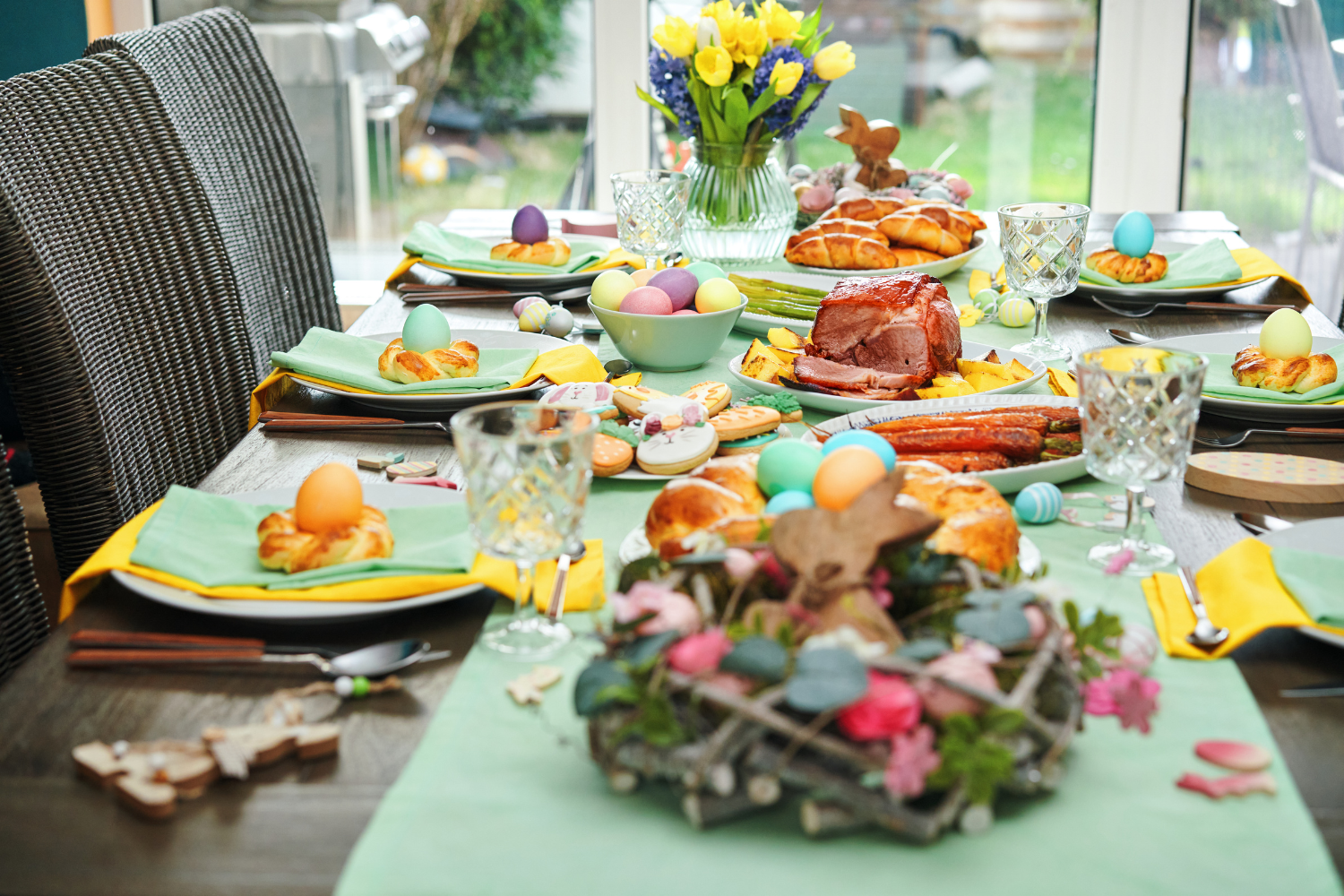
Lastly, if you really want to celebrate Easter like a local, you should know that on Easter Sunday, many families have a savory breakfast with boiled eggs, corallina (a typical salami) and a slice of casatiello or pizza di Pasqua (which is not an actual pizza, but a savory pie made of cheese).
So, Easter in Italy is more than a feast – it’s a moment where flavors and traditions come together around the same table, turning every meal into a celebration of culture and connection!